

Hello, I'm Fenil Sonani
AI & Machine Learning developer in New York City. I've spent the last four years getting ML models into production, and I write about what breaks on the way there.
I joined Archimedes IT as an AI/ML developer in my first year of undergrad. Two years later I was CTO, running engineering while I finished my degree. Our whole pitch was making it easier for people to interact with technology. I handled data ingestion, model serving, and the web stack, so I learned early that a good model is useless if the system around it keeps breaking.
I finished an MS in Computer Science at NJIT at the end of 2025, focused on deep learning and distributed systems, mostly how to train and serve large language models without burning money or blowing latency budgets. Now I'm the Founding AI Engineer at GetMyHotels, an AI-native hotel and flight booking platform where chat is the product. I own the AI stack end to end: the booking agent, its tools and evals, and the security and reliability work underneath it.
I also spent a year as a Technical Lead for my local Google Developer Community, running AI/ML and web workshops and helping students land their first open source contributions. I still ship side projects and write long articles here. The archive is basically my public notebook.
What I focus on
4 areas
AI & Machine Learning
Applied ML, LLM orchestration, retrieval pipelines, and production model serving.
PyTorchTransformersRAGLangChainEvalsDistributed Systems
High-throughput backends, event pipelines, and multi-region infrastructure.
GoNode.jsKafkagRPCPostgresRedisModern Web Platform
Full-stack product work that stays fast and accessible.
ReactNext.jsTypeScriptSvelteTailwindCloud & DevOps
CI/CD, infrastructure-as-code, observability, and Kubernetes-based platforms.
AWSTerraformDockerKubernetesOpenTelemetry
Timeline
Where I've been
Technical Lead
Sep 2025 — Dec 2025
Google Developer Community
-
CTO
-
AI/ML Developer
Jan 2022 — Sep 2024
Archimedes IT
-
Bookshelf
What stuck with me
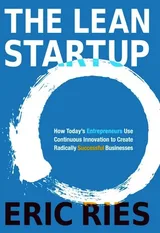
The Lean Startup
Eric Ries
If one book explains how I operate, it is this one. Ship early, measure, learn, repeat. Most of what I shipped too early, I shipped because of this book. No regrets.
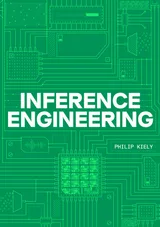
Inference Engineering
Philip Kiely
The closest thing to a manual for my day job. Serving models in production is its own discipline and this is one of the few books that treats it that way.

The Hard Thing About Hard Things
Ben Horowitz
I became a CTO while still in undergrad. This is the only startup book that felt like it was written by someone who had actually been in the room when things went wrong.
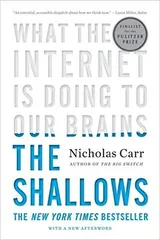
The Shallows
Nicholas Carr
Carr was right about what the internet does to attention. I write long articles partly to prove to myself I can still think in long form.
Paper shelf
Mostly the inference stack, in reading order
- Attention Is All You Need
Vaswani et al., 2017
The obvious pick, but I reread it every year or so and still catch details I missed. Everything below sits on top of this.
The transformer paper tells you what attention computes. This one tells you why it was slow, and fixes it by caring about memory movement instead of FLOPs. It changed how I look at GPU cost.
The sequel. Reads like a changelog of lessons from running v1 at scale: better work partitioning, fewer non-matmul ops, and a big jump in occupancy.
The point where kernel work becomes hardware co-design: async warp specialization and FP8 on Hopper. You stop optimizing for a GPU and start optimizing with it.
- Efficient Memory Management for LLM Serving with PagedAttention
Kwon et al., 2023
The vLLM paper. Paging the KV cache like an OS pages memory is the kind of idea that looks obvious only after someone does it. Made serving feel like systems engineering instead of magic.
- SGLang: Efficient Execution of Structured Language Model Programs
Zheng et al., 2023
RadixAttention makes prefix caching a first-class data structure instead of a lucky cache hit. The radix tree over KV cache is the trick I wish I had thought of.
- Fast Inference from Transformers via Speculative Decoding
Leviathan et al., 2022
Draft with a small model, verify with the big one, keep the tokens they agree on. Free speedup with the exact same output distribution. Still feels like cheating.
Speculation without a separate draft model, just extra decoding heads on the model you already have. Practical and a little audacious.
The strongest take on speculation I have read: predict at the feature level, not the token level. The draft model gets the hard part for free.
- Splitwise: Efficient Generative LLM Inference Using Phase Splitting
Patel et al., 2023
Prefill and decode want different hardware, so run them on different machines. Obvious in hindsight, which is the best kind of idea.
The scheduling math behind prefill/decode disaggregation, with goodput under latency SLOs as the metric that actually matters. Closest paper to my day-to-day latency budgets.
Quantization that respects which weights actually matter by looking at the activations, not the weights themselves. Protect the salient 1% and the rest can be cheap.
- GPTQ: Accurate Post-Training Quantization for Generative Pre-trained Transformers
Frantar et al., 2022
The paper that made 4-bit weights respectable. One-shot, no retraining, and the error compensation is proper old-school numerical thinking.
- SmoothQuant: Accurate and Efficient Post-Training Quantization for LLMs
Xiao et al., 2022
Activations are hard to quantize and weights are easy, so migrate the difficulty from one to the other ahead of time. Elegant.
- NanoQuant: Efficient Sub-1-Bit Quantization of Large Language Models
Chong et al., 2026
The newest addition to the stack. Sub-1-bit sounds absurd until you read how they share structure across weights. I am still deciding what I think.
- Judging LLM-as-a-Judge with MT-Bench and Chatbot Arena
Zheng et al., 2023
I run LLM judges in production evals and this paper is honest about their biases. I learned the same lesson the hard way: do not let a model grade its own family.